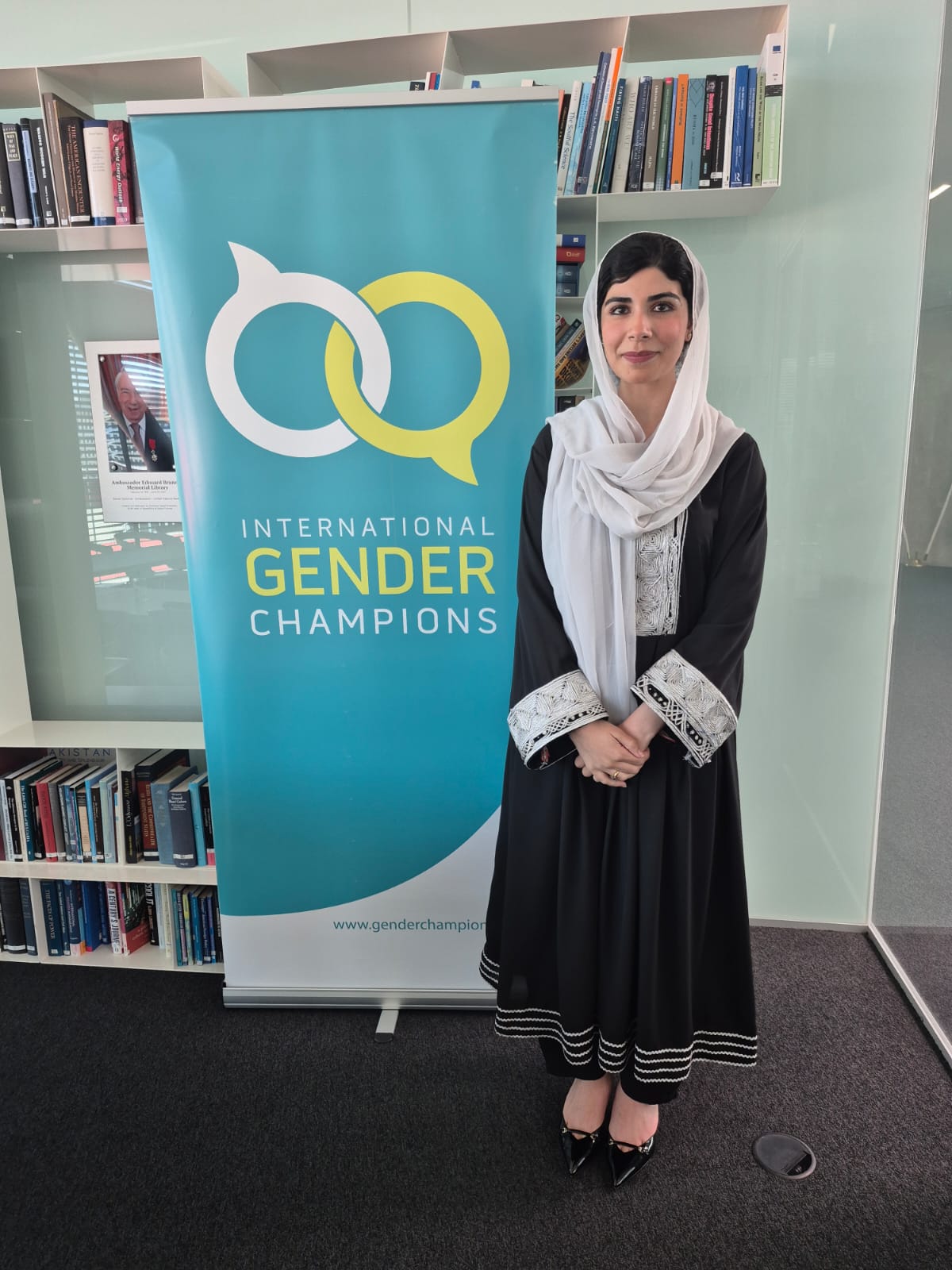
Amid ongoing restrictions on girls’ education in Afghanistan, grassroots initiatives are finding new ways to keep learning accessible. On 8 May 2026, the International Gender Champions Secretariat hosted a discussion with Pashtana Durrani, founder of LEARN Afghan, whose organisation has opened 25 underground schools for more than 4000 girls across the country. The discussion offered an insight into how underground education systems can operate in practice, as well as the broader implications of investing in girls’ education as a long-term development priority.
LEARN Afghan operates through a decentralised and community-led education model in close collaboration with the local communities: they play a central role in nominating teachers, providing secure learning spaces, and actively protect both students and educators. Through a hybrid system combining online and offline tools and methods, the programme offers girls lessons across a wide range of subjects, with particular emphasis on STEM curricula. Higher education pathways offer learners to graduate into professional trainings on midwifery, mental health and technology, helping to expand present and future economic opportunities for young women.
Looking beyond Afghanistan, Durrani is currently exploring how this model could be adapted to other post-conflict contexts. A key challenge that remains is securing official accreditation to ensure that students’ learning is formally recognised and can translate into access to global education and labour markets.
Durrani concluded by underscoring that education in Afghanistan must be understood not only as a humanitarian response, but as a long-term investment in resilience and development. She called for more flexible funding that can be directly managed by local organisations, and for stronger alignment between international funding structures and actors on the ground. Despite challenges, Durrani’s work highlights the resilience of communities determined to keep education alive, demonstrating how local initiatives continue to create spaces for learning and opportunity despite severe constraints.