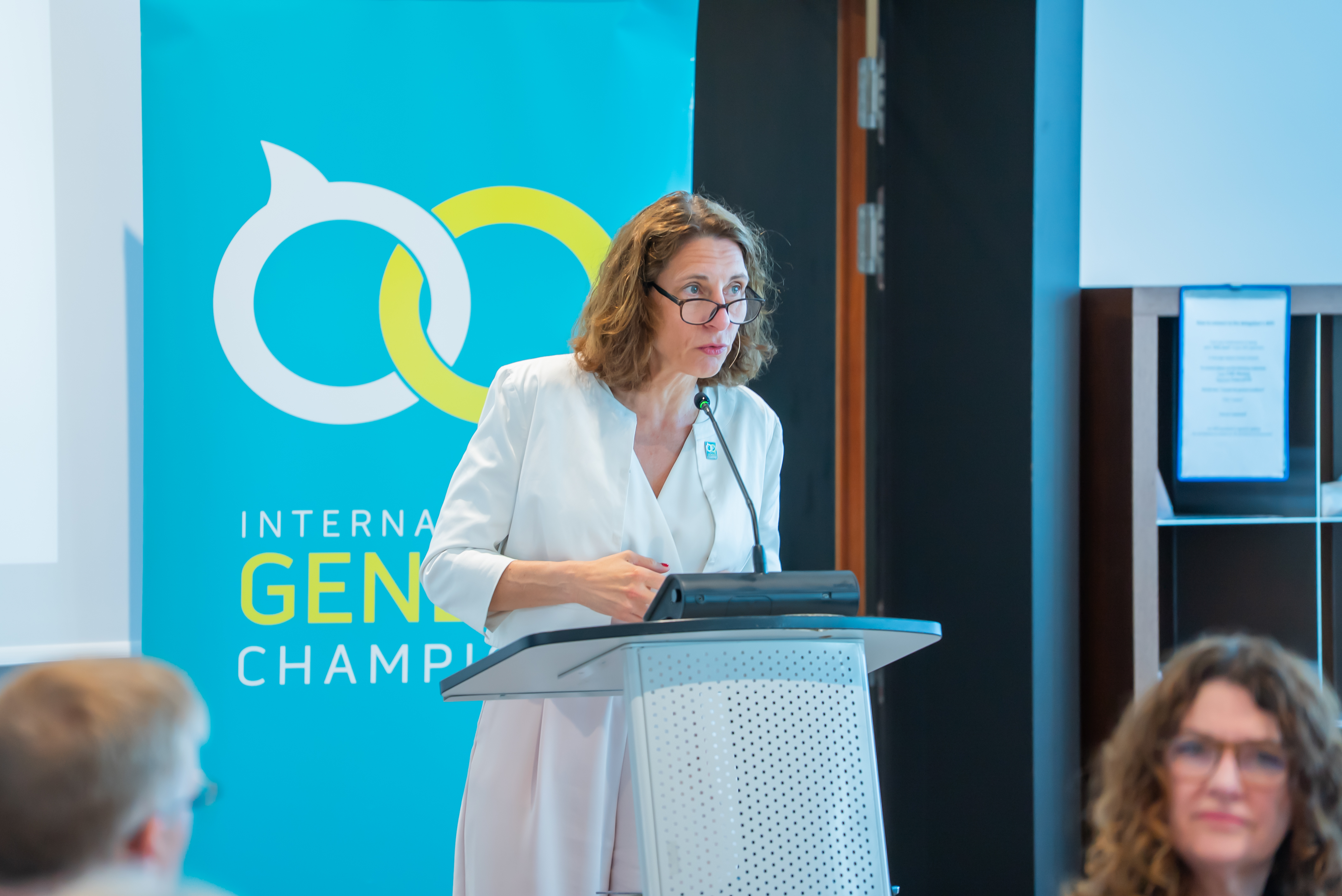
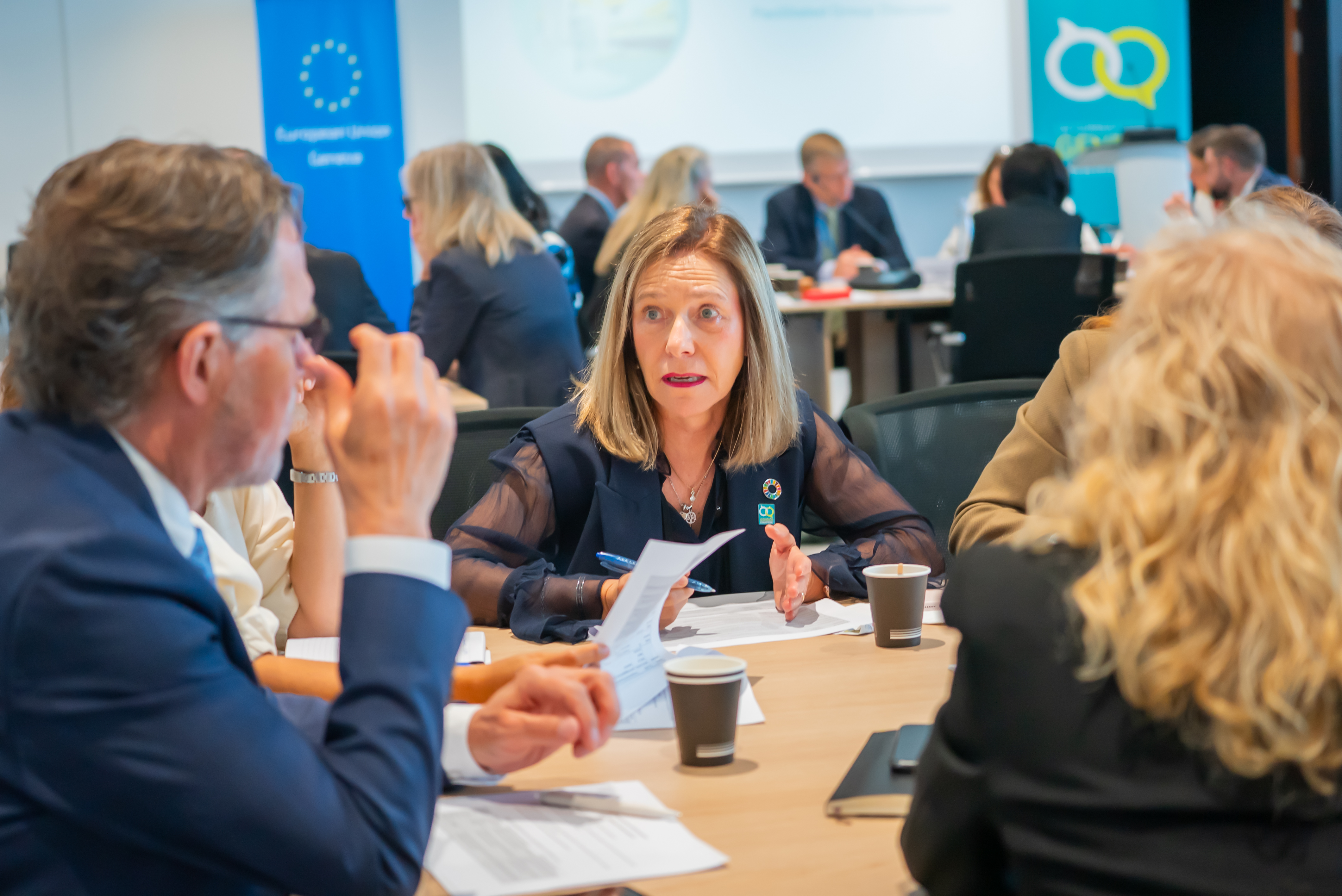
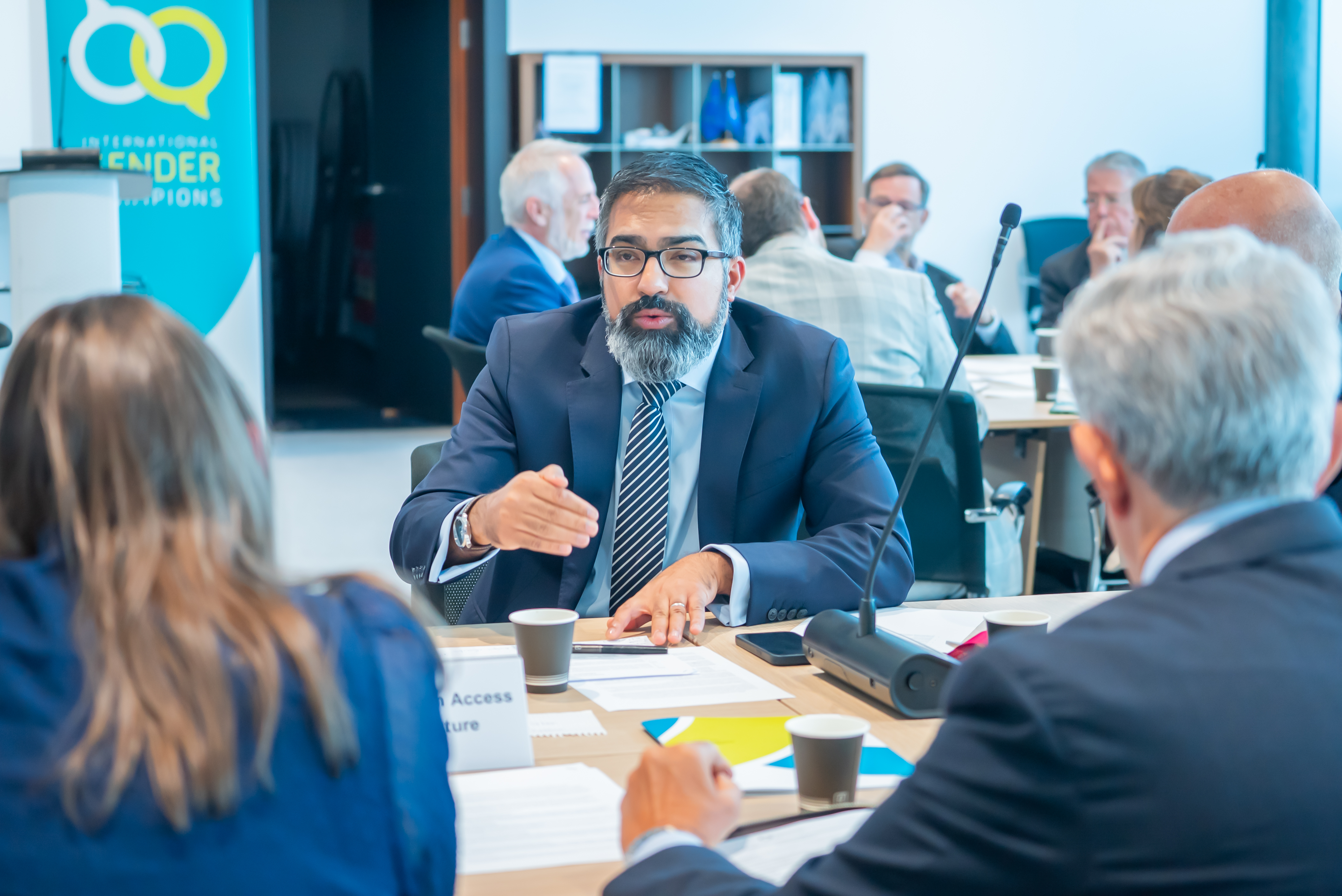
On 11 June 2026, Geneva-based Gender Champions gathered at the EU Delegation in Geneva for the network’s biannual meeting, hosted by H.E. Ambassador Deike Potzel of the Permanent Delegation of the European Union to the United Nations and other International Organisations in Geneva.
The meeting brought together over 60 heads of UN agencies and International Organsiations, Permanent Representatives of Member States and heads of civil society organisations. Taking place less than a month ahead of the AI for Good Summit—and with the Global AI Summit 2027 in Geneva on the horizon—the meeting focused on the timely theme of “Gender and AI” to explore how gender perspectives can be better integrated into the rapidly evolving field of artificial intelligence.
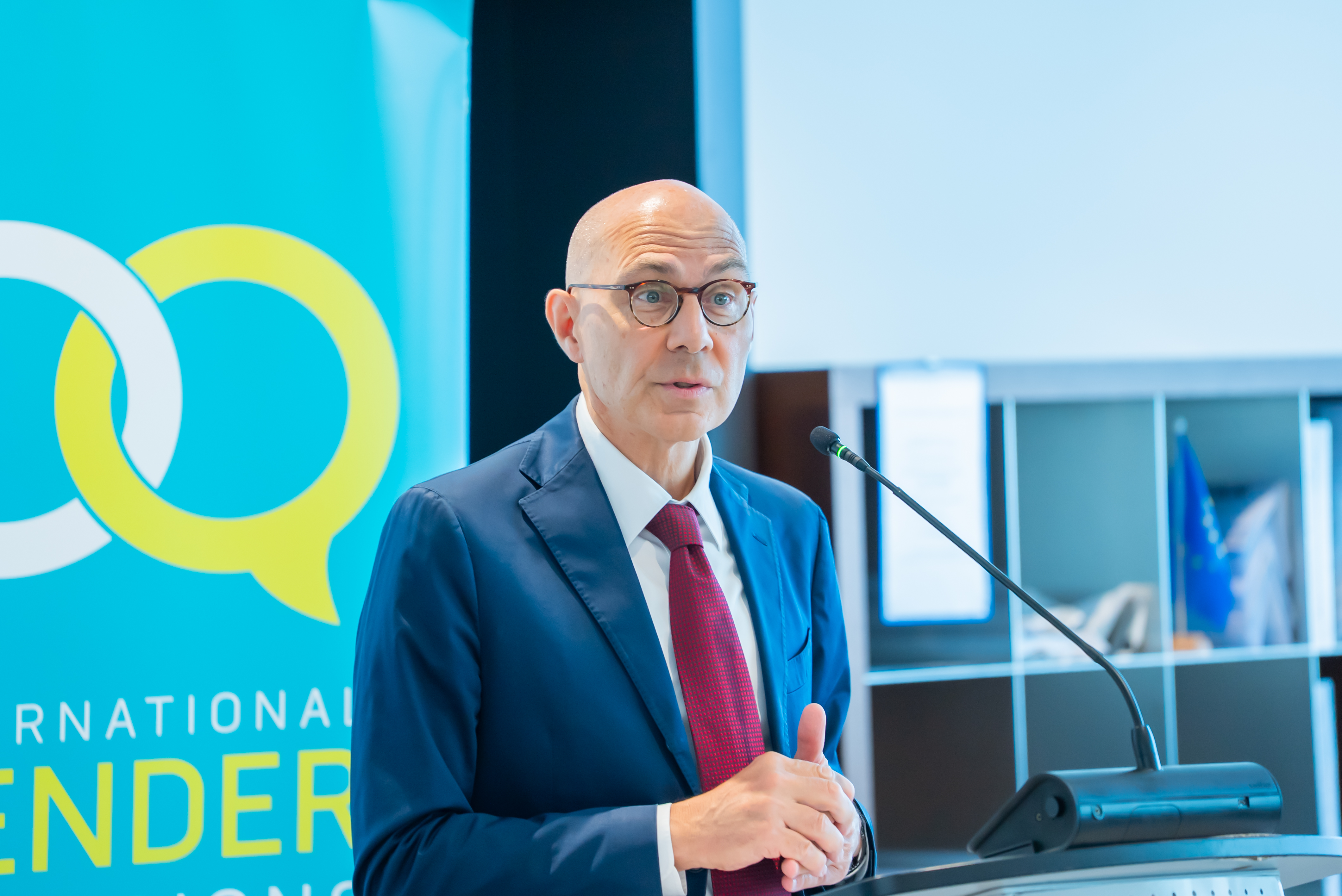
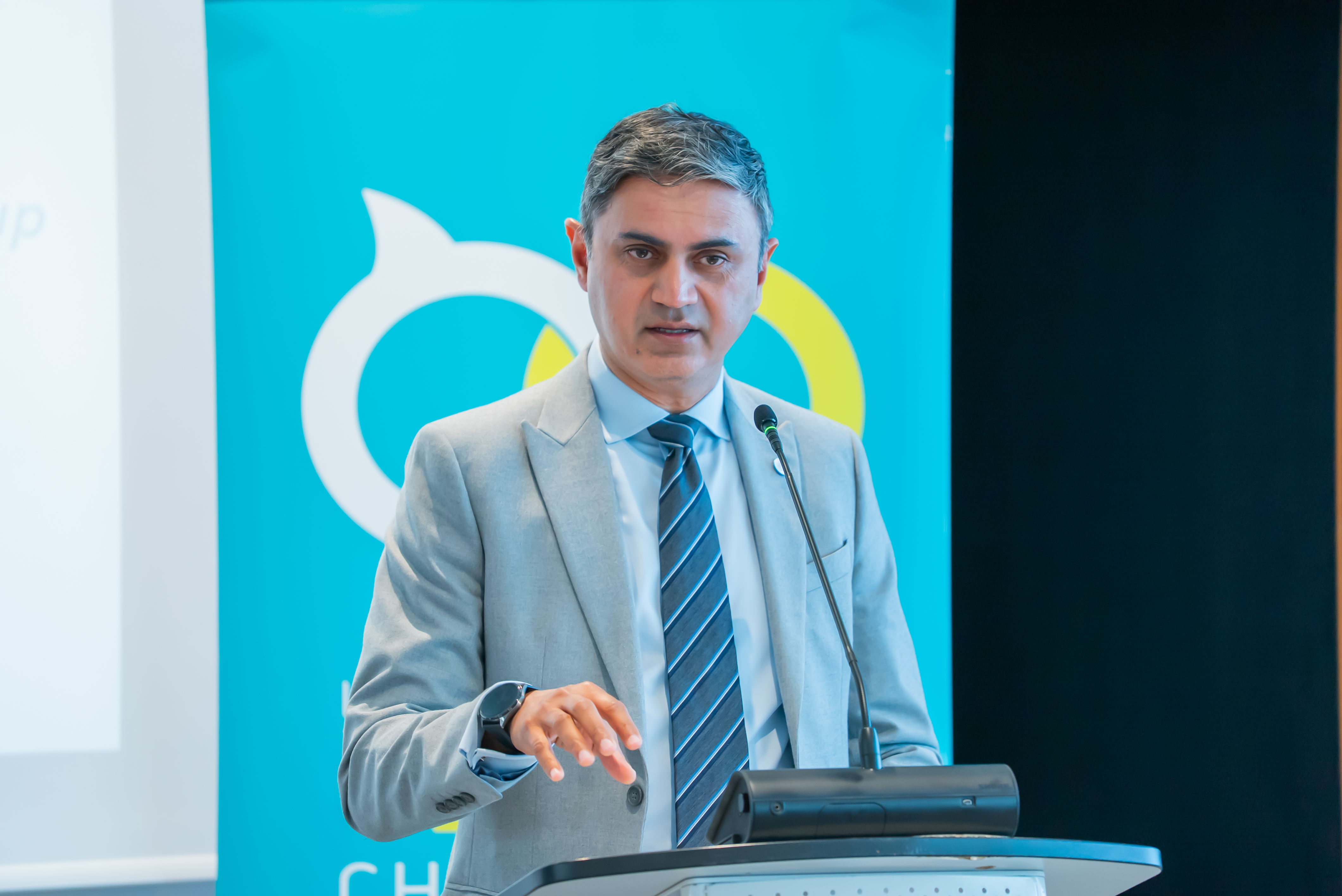
Following the welcoming remarks by Ambassador Potzel, participants heard from UN High Commissioner for Human Rights Volker Türk and UN International Computing Centre Director Sameer Chauhan. Their remarks set the scene for the interactive segment, during which Champions exchanged in small group discussions on five different topics: Combating Technology-Facilitated Gender-Based Violence, Bridging Gender and Digital Silos in International Geneva, Closing Gender Gaps in Access to Digital Infrastructure, Pathways for Mainstreaming Gender into AI Design and Governance; and From Representation to Ownership: Women in the AI Economy.
The discussions highlighted the importance of embedding gender considerations into AI governance from the start, rather than retrofitting them later. Champions discussed concrete opportunities for action, with a focus on the role of International Geneva. The following themes emerged:
- AI will reinforce inequality unless corrected early: Infrastructure gaps, data bias, and concentration of power mean most countries and women remain users, not shapers.
- Window of opportunity: Geneva's 2026–2027 calendar (WSIS Forum, AI for Good, the 2027 AI Global Summit) offers a real, but time-bound, chance to embed gender standards into AI governance.
- Lack of technical expertise should not hold up the discussion: Champions set the expectations; partner institutions can supply the technical depth.
- Bottom Line: AI is largely being shaped outside of multilateral processes, by a small number of companies and countries. But while not all parts of the AI system can be influenced directly, Champions retain real political leverage in areas such as standard-setting, procurement, regulation, and agenda-setting in global processes.
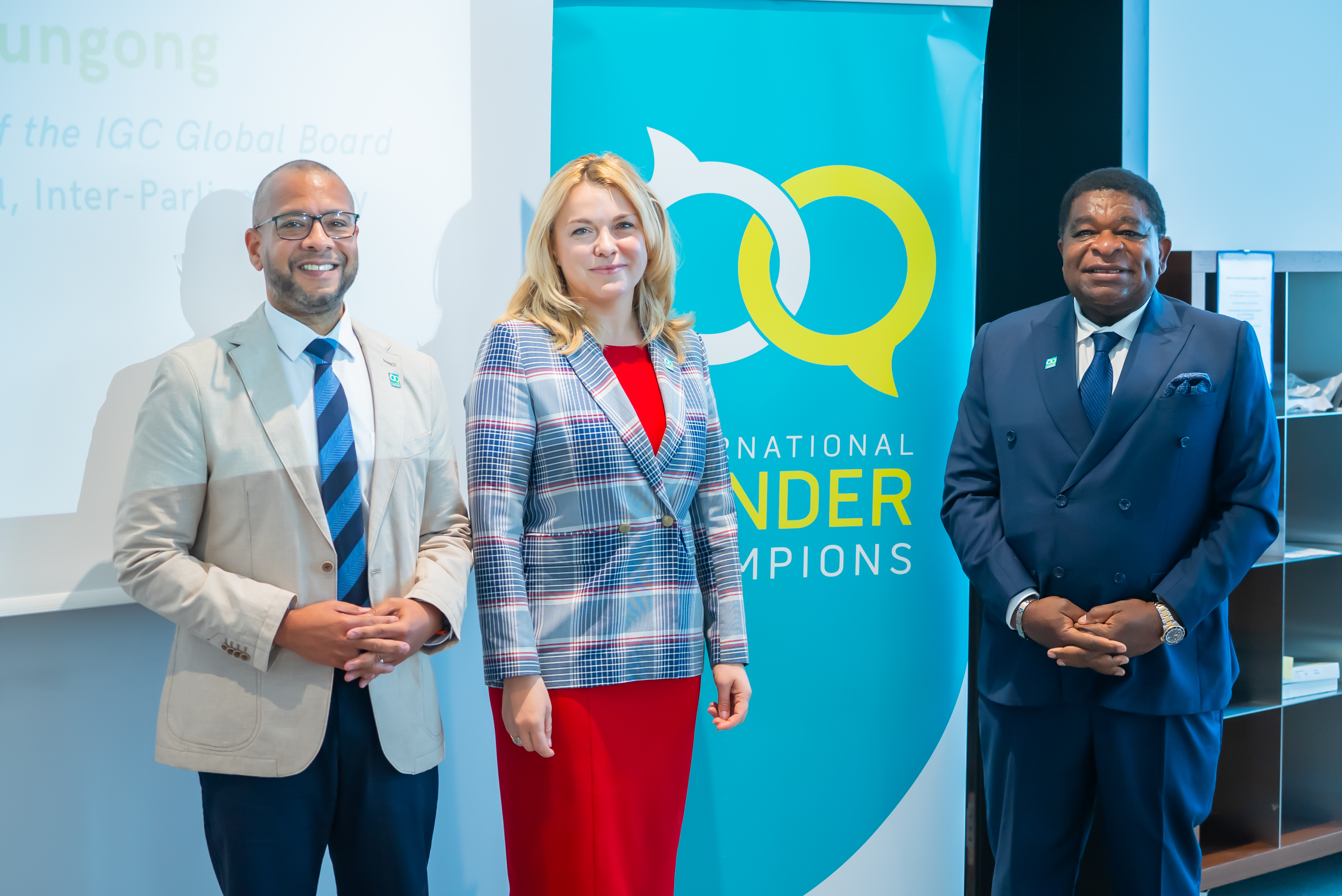
Champions also paid tribute to the exceptional six-year leadership of outgoing IGC Global Board Chair and Secretary General of the Inter-Parliamentary Union Martin Chungong, and welcomed Tatiana Molcean, Executive Secretary of the United Nations Economic Commission for Europe (UNECE) as the new Chair, and Ambassador Matthew Wilson of Barbados as Vice-Chair of the IGC Global Board. Learn more about the IGC leadership transition here.